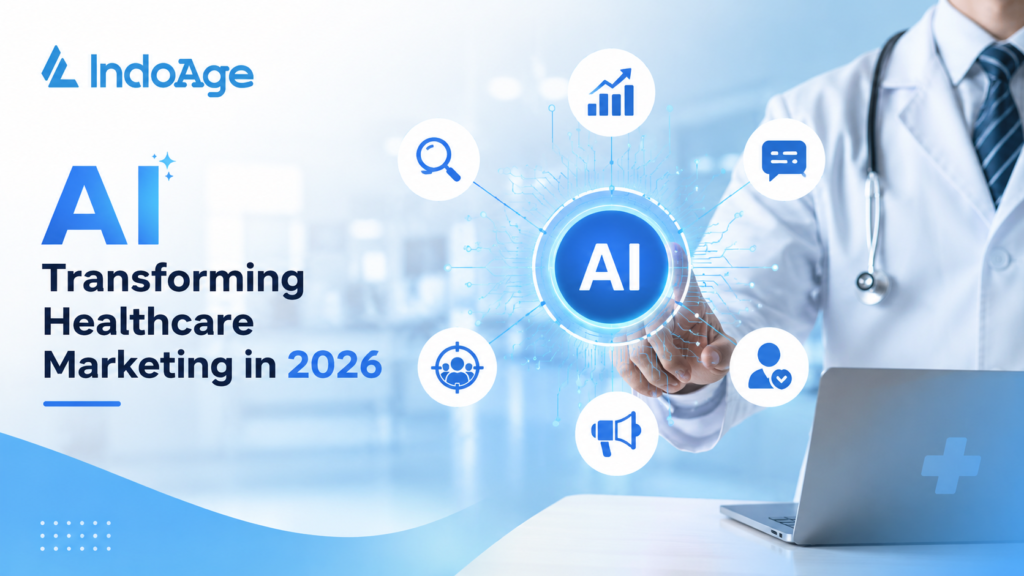
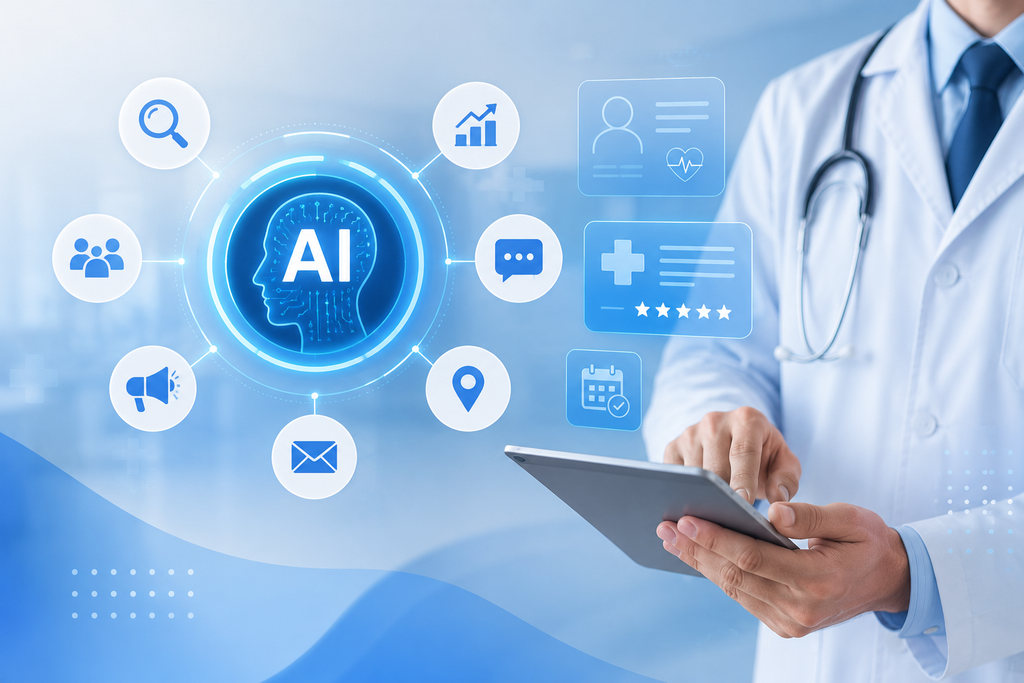
Artificial intelligence is no longer just an emerging technology in healthcare. In 2026, it is becoming an important part of how healthcare organizations attract, engage, and retain patients online.
Patients now expect faster answers, personalized experiences, relevant information, and easy access to healthcare services. At the same time, healthcare providers face increasing competition in search results, social media, local listings, and AI-powered search experiences.
This is where digital marketing for healthcare is changing. AI is helping healthcare organizations better understand patient behavior, improve marketing efficiency, create relevant content, and deliver more personalized digital experiences.
However, successful AI adoption is not about replacing healthcare marketers or medical professionals. It is about using technology strategically while maintaining accuracy, trust, privacy, and a human-centered approach.
AI is Changing How Patients Search for Healthcare Information
Traditional search engines remain important, but the way people search for healthcare information is evolving. Patients increasingly use AI-powered search experiences, voice assistants, conversational tools, and detailed search queries to find answers.
Instead of searching only for broad terms such as “best dermatologist,” users may ask more specific questions about symptoms, treatments, locations, insurance, recovery time, or appointment availability.
For healthcare businesses, this means content needs to go beyond simply targeting individual keywords.
An effective digital marketing for healthcare strategy should focus on:
- Answering real patient questions
- Creating clear and medically responsible content
- Demonstrating expertise and credibility
- Optimizing local healthcare information
- Structuring content for both search engines and AI-powered discovery
Healthcare websites that provide useful, well-organized, and trustworthy information are better positioned to remain visible as search behavior continues to change.
AI-Powered Personalization is Improving Patient Engagement
One of the biggest advantages of AI in healthcare marketing is personalization.
Different patients have different needs, concerns, and stages in their decision-making journey. Someone researching a treatment for the first time requires different information from someone ready to schedule an appointment.
AI can help marketers analyze user behavior and create more relevant experiences based on factors such as website interactions, content interests, search behavior, and engagement patterns.
For example, AI-powered systems can help healthcare marketers:
- Recommend relevant content
- Personalize email communication
- Segment audiences more effectively
- Improve appointment follow-ups
- Identify high-intent users
- Deliver more relevant advertising messages
Personalization can make digital experiences more useful, but healthcare marketers must always handle patient information responsibly and follow applicable privacy and data protection requirements.
Healthcare SEO is Becoming More Intelligent
SEO remains one of the most valuable channels in digital marketing for healthcare, but AI is changing how marketers research, optimize, and improve content.
AI tools can support keyword research, content analysis, topic discovery, competitor research, and performance monitoring. They can also help identify gaps in existing content and uncover questions patients are actively asking online.
However, generating large volumes of AI-written content is not an effective SEO strategy.
Healthcare content requires a higher level of accuracy and trust because incorrect information can negatively affect users. AI-generated drafts should therefore be reviewed by qualified subject-matter experts before publication.
Google has also emphasized the importance of helpful, reliable, people-first content. Healthcare organizations should focus on expertise, accuracy, transparency, and a strong user experience rather than publishing content simply to rank for more keywords.
You can explore Google’s guidance on creating helpful content through the Google Search Central.
AI is Making Healthcare Content Marketing More Efficient
Creating high-quality healthcare content can require significant time and resources. AI can help streamline parts of the process.
For example, marketing teams can use AI to brainstorm blog topics, organize content outlines, identify frequently asked questions, summarize research, and repurpose existing content into different formats.
A single detailed healthcare article could potentially be transformed into:
- Social media posts
- Email newsletters
- Video scripts
- Frequently asked questions
- Educational website content
This allows healthcare organizations to maintain a more consistent content strategy.
However, efficiency should never come at the expense of quality. Medical claims, treatment information, and health-related recommendations should always be carefully reviewed. AI can support content production, but human expertise remains essential.
Conversational AI is Creating Faster Patient Experiences
Patients often expect quick responses when searching for healthcare services. Conversational AI, including chatbots and virtual assistants, can help answer common non-diagnostic questions at any time.
These tools can assist users with:
- Appointment information
- Service details
- Clinic locations
- Frequently asked questions
- Basic navigation
- Contact and scheduling options
By reducing friction, conversational tools can improve the patient journey and help potential patients find relevant information faster.
The key is to use AI within appropriate boundaries. Marketing chatbots should not present themselves as medical professionals or provide unsafe diagnostic advice. Clear escalation paths to qualified staff are essential.
The World Health Organization’s AI resources also highlight the growing importance of responsible and ethical AI use in healthcare.
AI is Improving Healthcare Advertising Performance
Paid advertising is another area where AI is becoming increasingly important.
Advertising platforms already use machine learning to optimize targeting, bidding, creative delivery, and campaign performance. In 2026, healthcare marketers can use AI insights to better understand which campaigns generate meaningful engagement and qualified leads.
AI can help identify patterns in campaign performance and support faster testing of different:
- Ad messages
- Audience segments
- Landing pages
- Calls to action
- Creative formats
The goal should not simply be generating more clicks. A strong digital marketing for healthcare strategy focuses on attracting relevant audiences and guiding them toward meaningful actions, such as booking an appointment or contacting a healthcare provider.
The Human Element Still Matters Most
Despite rapid AI adoption, healthcare marketing remains deeply human.
Patients want accurate information, empathy, trust, and confidence when choosing a healthcare provider. AI can improve efficiency and personalization, but it cannot replace genuine expertise or meaningful patient relationships.
The strongest healthcare marketing strategies in 2026 will combine AI technology with human oversight.
Healthcare organizations should use AI to analyze data, automate repetitive tasks, improve personalization, and support content creation. At the same time, qualified professionals should remain responsible for medical accuracy, patient communication, and strategic decision-making.
Conclusion
AI is reshaping digital marketing for healthcare by changing how patients search, interact with content, engage with healthcare providers, and make decisions online. From intelligent SEO and personalized content to conversational experiences and advertising optimization, AI offers significant opportunities for healthcare organizations in 2026.
The key is to adopt AI responsibly while keeping trust, accuracy, privacy, and patient experience at the center of every strategy. A well-planned approach supported by healthcare marketing expertise can help providers build stronger digital visibility and connect with the right audience. IndoAge can support healthcare businesses in developing digital strategies that combine SEO, content, paid marketing, and emerging AI-driven opportunities for sustainable online growth.
FAQs
1. How is AI used in digital marketing for healthcare?
AI can support healthcare marketing through keyword research, content planning, personalization, advertising optimization, audience analysis, chatbots, and performance tracking. However, healthcare-related content should always be reviewed for accuracy and compliance.
2. Is AI replacing healthcare marketers?
No. AI is primarily a tool that helps automate repetitive tasks, analyze large amounts of data, and improve efficiency. Human marketers and healthcare professionals are still essential for strategy, creativity, medical accuracy, ethical decision-making, and patient trust.